





Background: Interleukin-2 (IL-2) has an essential role in the expansion and function of CD4+ regulatory T cells (Tregs). Tregs reduce tissue damage by limiting the immune response following infection and regulate autoreactive CD4+ effector T cells (Teffs) to prevent autoimmune diseases, such as type 1 diabetes (T1D). Genetic susceptibility to T1D causes alterations in the IL-2 pathway, a finding that supports Tregs as a cellular therapeutic target. Aldesleukin (Proleukin; recombinant human IL-2), which is administered at high doses to activate the immune system in cancer immunotherapy, is now being repositioned to treat inflammatory and autoimmune disorders at lower doses by targeting Tregs.
Methods and findings: To define the aldesleukin dose response for Tregs and to find doses that increase Tregs physiologically for treatment of T1D, a statistical and systematic approach was taken by analysing the pharmacokinetics and pharmacodynamics of single doses of subcutaneous aldesleukin in the Adaptive Study of IL-2 Dose on Regulatory T Cells in Type 1 Diabetes (DILT1D), a single centre, non-randomised, open label, adaptive dose-finding trial with 40 adult participants with recently diagnosed T1D. The primary endpoint was the maximum percentage increase in Tregs (defined as CD3+CD4+CD25highCD127low) from the baseline frequency in each participant measured over the 7 d following treatment. There was an initial learning phase with five pairs of participants, each pair receiving one of five pre-assigned single doses from 0.04 × 10⁶ to 1.5 × 10⁶ IU/m2, in order to model the dose-response curve. Results from each participant were then incorporated into interim statistical modelling to target the two doses most likely to induce 10% and 20% increases in Treg frequencies. Primary analysis of the evaluable population (n = 39) found that the optimal doses of aldesleukin to induce 10% and 20% increases in Tregs were 0.101 × 10⁶ IU/m2 (standard error [SE] = 0.078, 95% CI = -0.052, 0.254) and 0.497 × 10⁶ IU/m2 (SE = 0.092, 95% CI = 0.316, 0.678), respectively. On analysis of secondary outcomes, using a highly sensitive IL-2 assay, the observed plasma concentrations of the drug at 90 min exceeded the hypothetical Treg-specific therapeutic window determined in vitro (0.015-0.24 IU/ml), even at the lowest doses (0.040 × 10⁶ and 0.045 × 10⁶ IU/m2) administered. A rapid decrease in Treg frequency in the circulation was observed at 90 min and at day 1, which was dose dependent (mean decrease 11.6%, SE = 2.3%, range 10.0%-48.2%, n = 37), rebounding at day 2 and increasing to frequencies above baseline over 7 d. Teffs, natural killer cells, and eosinophils also responded, with their frequencies rapidly and dose-dependently decreased in the blood, then returning to, or exceeding, pretreatment levels. Furthermore, there was a dose-dependent down modulation of one of the two signalling subunits of the IL-2 receptor, the β chain (CD122) (mean decrease = 58.0%, SE = 2.8%, range 9.8%-85.5%, n = 33), on Tregs and a reduction in their sensitivity to aldesleukin at 90 min and day 1 and 2 post-treatment. Due to blood volume requirements as well as ethical and practical considerations, the study was limited to adults and to analysis of peripheral blood only.
Conclusions: The DILT1D trial results, most notably the early altered trafficking and desensitisation of Tregs induced by a single ultra-low dose of aldesleukin that resolves within 2-3 d, inform the design of the next trial to determine a repeat dosing regimen aimed at establishing a steady-state Treg frequency increase of 20%-50%, with the eventual goal of preventing T1D.
Trial registration: ISRCTN Registry ISRCTN27852285; ClinicalTrials.gov NCT01827735.
Regulatory T Cell Responses in Participants with Type 1 Diabetes after a Single Dose of Interleukin-2: A Non-Randomised, Open Label, Adaptive Dose-Finding Trial
浏览次数:210 分享: 


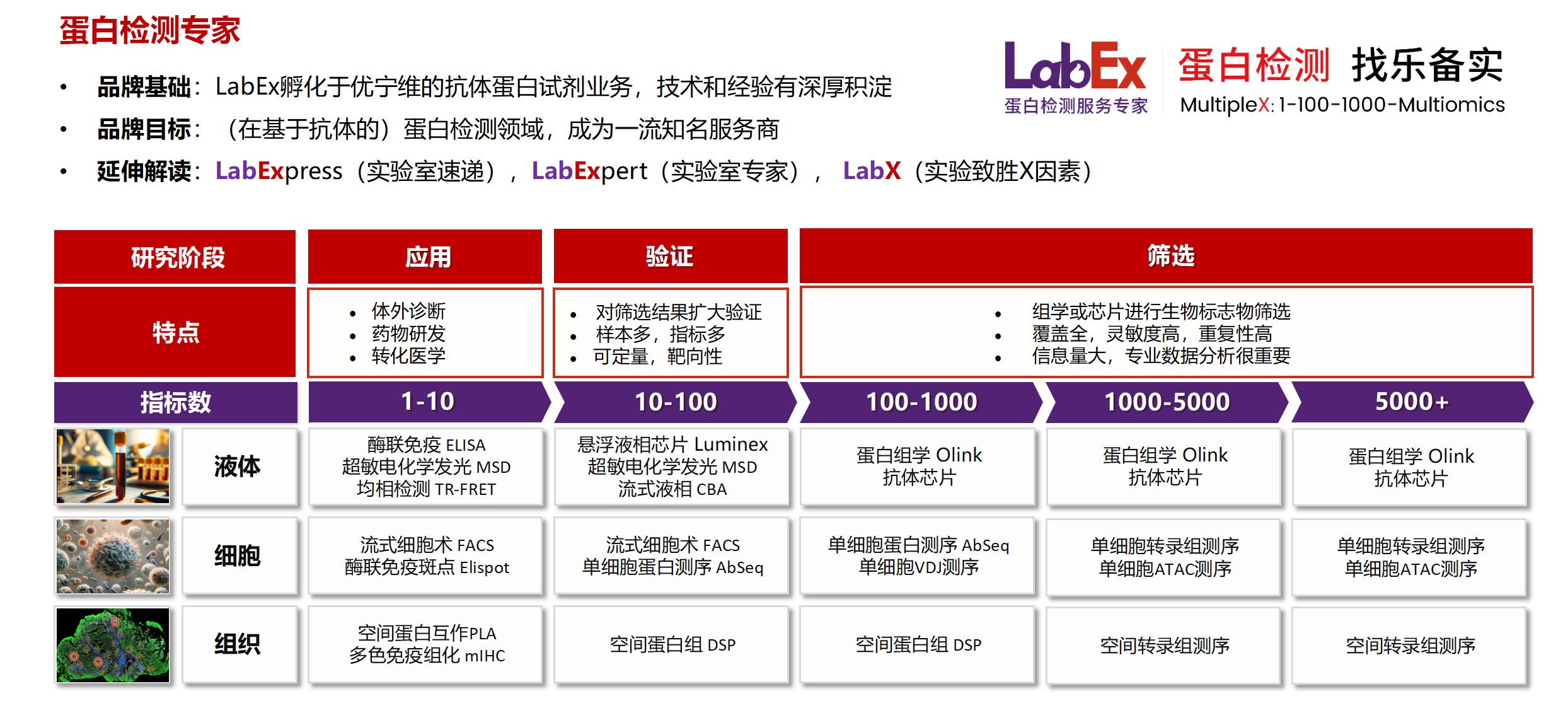
乐备实(上海优宁维生物科技股份有限公司旗下全资子公司),是国内专注于提供高质量蛋白检测以及组学分析服务的实验服务专家,自2018年成立以来,乐备实不断寻求突破,公司的服务技术平台已扩展到单细胞测序、空间多组学、流式检测、超敏电化学发光、Luminex多因子检测、抗体芯片、PCR Array、ELISA、Elispot、PLA蛋白互作、多色免疫组化、DSP空间多组学等30多个,建立起了一套涵盖基因、蛋白、细胞以及组织水平实验的完整检测体系。
我们可提供从样本运输、储存管理、样本制备、样本检测到检测数据分析的全流程服务。凭借严格的实验室管理流程、标准化实验室操作、原始数据储存体系以及实验项目管理系统,已经为超过3000家客户单位提供服务,年检测样本超过100万,受到了广大客户的信任与支持。
声明:本篇文章在创作中部分采用了人工智能辅助。如有任何内容涉及版权或知识产权问题,敬请告知,我们承诺将在第一时间核实并撤下。
详见LabEx网站(
www.u-labex.com)或来电咨询!
基因水平:PCR Array、RT-PCR、PCR、单细胞测序
蛋白水平:MSD、Luminex、CBA、Elispot、Antibody Array、ELISA、Sengenics
细胞水平:细胞染色、细胞分选、细胞培养、细胞功能
组织水平:空间多组学、多重荧光免疫组化、免疫组化、免疫荧光
数据分析:流式数据分析、组化数据分析、多因子数据分析
基因水平:PCR Array、RT-PCR、PCR、单细胞测序
蛋白水平:MSD、Luminex、CBA、Elispot、Antibody Array、ELISA、Sengenics
细胞水平:细胞染色、细胞分选、细胞培养、细胞功能
组织水平:空间多组学、多重荧光免疫组化、免疫组化、免疫荧光
数据分析:流式数据分析、组化数据分析、多因子数据分析
联系电话:4001619919
联系邮箱:labex-mkt@u-labex.com
公众平台:蛋白检测服务专家
联系邮箱:labex-mkt@u-labex.com
公众平台:蛋白检测服务专家




本网站销售的所有产品及服务均不得用于人类或动物之临床诊断或治疗,仅可用于工业或者科研等非医疗目的。

 沪公网安备31011502400759号
 营业执照(三证合一)

 labex-mkt@u-labex.com
 上海市浦东新区古丹路15弄18号楼4楼
请给“蛋白检测服务专家”公众号留言吧!我们客服当前在线哦