





Objective:To characterize the role of neutrophil extracellular traps (NETs) in heterotopic ossification (HO) formation and progression and to use mechanical and pharmacological methods to decrease NETosis and mitigate HO formation.
Background:Traumatic HO is the aberrant osteochondral differentiation of mesenchymal progenitor cells after traumatic injury, burns, or surgery. While the innate immune response has been shown to be necessary for HO formation, the specific immune cell phenotype and function remain unknown. Neutrophils, one of the earliest immune cells to respond after HO-inducing injuries, can extrude DNA, forming highly inflammatory NETs. We hypothesized that neutrophils and NETs would be diagnostic biomarkers and therapeutic targets for the detection and mitigation of HO.
Methods:C57BL6J mice underwent burn/tenotomy (a well-established mouse model of HO) or a non-HO-forming sham injury. These mice were either (1) ambulated ad libitum, (2) ambulated ad libitum with daily intraperitoneal hydroxychloroquine, ODN-2088 (both known to affect NETosis pathways), or control injections, or (3) had the injured hind limb immobilized. Single-cell analysis was performed to analyze neutrophils, NETosis, and downstream signaling after the HO-forming injury. Immunofluorescence microscopy was used to visualize NETosis at the HO site and neutrophils were identified using flow cytometry. Serum and cell lysates from HO sites were analyzed using enzyme-linked immunosorbent assay for myeloperoxidase-DNA and ELA2-DNA complexes to identify NETosis. Micro-computerized tomography was performed on all groups to analyze the HO volume.
Results:Molecular and transcriptional analyses revealed the presence of NETs within the HO injury site, which peaked in the early phases after injury. These NETs were highly restricted to the HO site, with gene signatures derived from both in vitro NET induction and clinical neutrophil characterizations showing a high degree of NET "priming" at the site of injury, but not in neutrophils in the blood or bone marrow. Cell-cell communication analyses revealed that this localized NET formation coincided with high levels of toll-like receptor signaling specific to neutrophils at the injury site. Reducing the overall neutrophil abundance within the injury site, either pharmacologically through treatment with hydroxychloroquine, the toll-like receptor 9 inhibitor OPN-2088, or mechanical treatment with limb offloading, results in the mitigation of HO formation.
Conclusions:These data provide a further understanding of the ability of neutrophils to form NETs at the injury site, clarify the role of neutrophils in HO, and identify potential diagnostic and therapeutic targets for HO mitigation.
Neutrophil and NETosis Modulation in Traumatic Heterotopic Ossification
浏览次数:85 分享: 


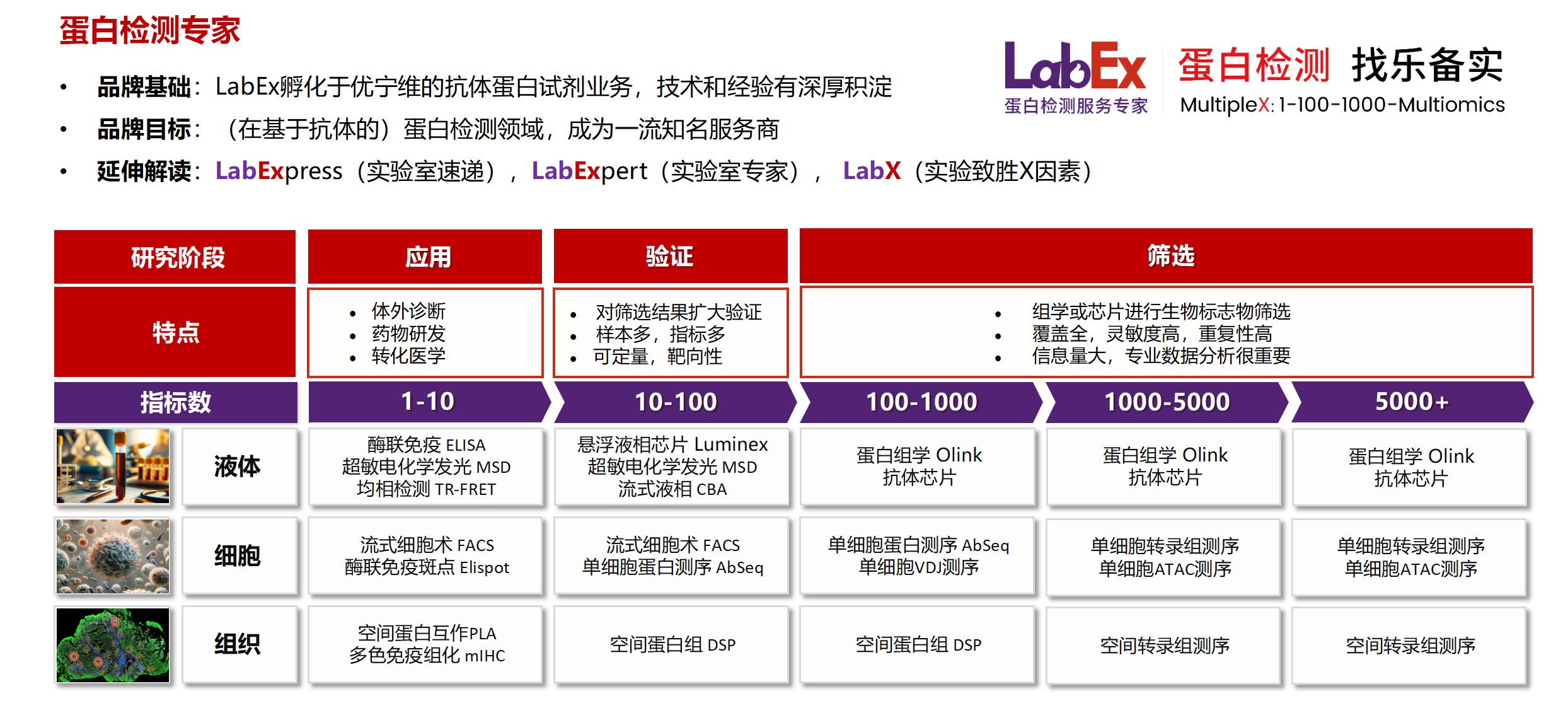
乐备实(上海优宁维生物科技股份有限公司旗下全资子公司),是国内专注于提供高质量蛋白检测以及组学分析服务的实验服务专家,自2018年成立以来,乐备实不断寻求突破,公司的服务技术平台已扩展到单细胞测序、空间多组学、流式检测、超敏电化学发光、Luminex多因子检测、抗体芯片、PCR Array、ELISA、Elispot、PLA蛋白互作、多色免疫组化、DSP空间多组学等30多个,建立起了一套涵盖基因、蛋白、细胞以及组织水平实验的完整检测体系。
我们可提供从样本运输、储存管理、样本制备、样本检测到检测数据分析的全流程服务。凭借严格的实验室管理流程、标准化实验室操作、原始数据储存体系以及实验项目管理系统,已经为超过3000家客户单位提供服务,年检测样本超过100万,受到了广大客户的信任与支持。
声明:本篇文章在创作中部分采用了人工智能辅助。如有任何内容涉及版权或知识产权问题,敬请告知,我们承诺将在第一时间核实并撤下。
详见LabEx网站(
www.u-labex.com)或来电咨询!
基因水平:PCR Array、RT-PCR、PCR、单细胞测序
蛋白水平:MSD、Luminex、CBA、Elispot、Antibody Array、ELISA、Sengenics
细胞水平:细胞染色、细胞分选、细胞培养、细胞功能
组织水平:空间多组学、多重荧光免疫组化、免疫组化、免疫荧光
数据分析:流式数据分析、组化数据分析、多因子数据分析
基因水平:PCR Array、RT-PCR、PCR、单细胞测序
蛋白水平:MSD、Luminex、CBA、Elispot、Antibody Array、ELISA、Sengenics
细胞水平:细胞染色、细胞分选、细胞培养、细胞功能
组织水平:空间多组学、多重荧光免疫组化、免疫组化、免疫荧光
数据分析:流式数据分析、组化数据分析、多因子数据分析
联系电话:4001619919
联系邮箱:labex-mkt@u-labex.com
公众平台:蛋白检测服务专家
联系邮箱:labex-mkt@u-labex.com
公众平台:蛋白检测服务专家




本网站销售的所有产品及服务均不得用于人类或动物之临床诊断或治疗,仅可用于工业或者科研等非医疗目的。

 沪公网安备31011502400759号
 营业执照(三证合一)

 labex-mkt@u-labex.com
 上海市浦东新区古丹路15弄18号楼4楼

请给“蛋白检测服务专家”公众号留言吧!我们客服当前在线哦